
Kumar Basnet
Space traveling, about 60 years ago, was an ambitious dream. That changed on April 12, 1961, when Yuri Gagarin became the first person to travel in space. Two years later, on June 16, 1963, Valentina Tereshkova from the Soviet Union became the first woman to reach space and remains the only woman to make a solo spaceflight till date.
When we think about space travel, we often imagine ground-breaking technologies, scientific experiments and exploration, extreme environmental challenges and daring astronauts pushing their limits against these challenges. As more women travel to space, there are less visible yet critical issues to address, among them is menstrual hygiene management (MHM).
Since the historic spaceflight of Valentina Tereshkova, nearly 73 women have ventured into space. With the growing number of female astronauts, the need to manage menstruation safely and effectively during space missions has become increasingly important. This includes female astronauts joining space missions, space agencies. From the International Space Station (ISS) to potential future missions to Mars, the solutions of ‘Period Beyond Earth’ need something reliable, safe and sustainable for astronauts. Menstrual health needs to be recognized as a crucial part of mission planning, not just a personal issue.
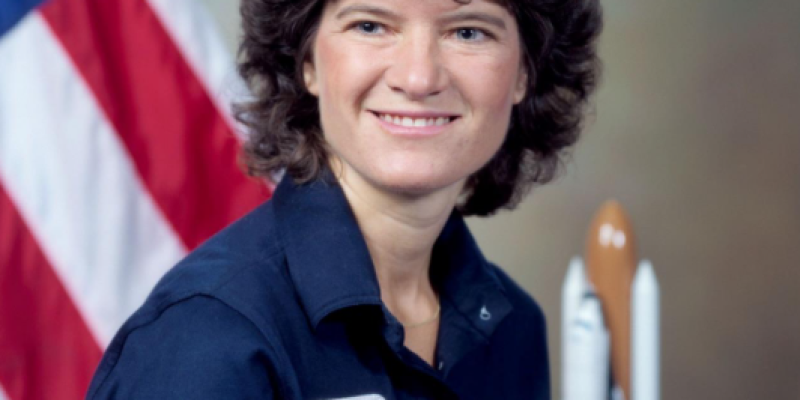
Early space missions were designed especially for men astronauts. In fact, when women were first ventured into space, many thought menstruations would be a significant barrier. It wasn’t until 1983, when Dr.Sally Ride became the first American woman to fly in space, that NASA began considering how menstruation would be managed. At that time, NASA infamously asked Dr.Ride whether 100 tampons would be enough for a week-long mission, showing the lack of understanding about menstruation at that time.
Space presents an challenges like microgravity, limited resources, psychological and physical health concerns. In microgravity fluids don’t flow the same way as earth which affects every bodily functionin space. Concerns were also raised regarding the impact which microgravity has on natural menstrual flow. Fortunately, menstruation occurs normally in a microgravity environment, although managing it is far more complicated than it’s on earth. Everything in a spacecraft is limited, the amount of water, the area, and the system for waste management and disposal. Cleaning reusable menstrual products or properly disposing of used menstrual products poses a problem in logistics.
Although pads and tampons are commonly used, they generate waste, which adds additional burden in a spacecraft’s already complicated waste disposal systems. Water scarcity also constrains the cleaning of menstrual cups or other reusable products. Besides physical problems, menstruation may entail emotional and psychological complications for female astronauts. The confined environment of spacecraft, combined with stress, isolation, and the high workload of space missions put on them, may exacerbate premenstrual symptoms. In addition to this, there is also the question of privacy, which is practically lacking in shared living quarters such as that of the International Space Station (ISS).
To avoid these challenges, many female astronauts suppress menstruation altogether by using hormonal contraceptives. This is done using hormonal contraceptives, typically by taking oral contraceptive pills continuously. ; This reduces menstrual product needs and simplifies hygiene management, which is highly necessary regarding the scarcity of water resources and waste disposal on spacecraft. This option is widely used among astronauts, though it remains a personal medical choice, made with guidance from mission doctors.
Other than suppressing menstruation, astronauts use traditional menstrual hygiene products such as pads and tampons. Such products have been specifically prepared for space missions, which are disposed of through the spacecraft’s onboard waste management systems.
Waste, including used menstrual products, is periodically removed from the ISS via cargo resupply missions, which carry supplies up to the station and return with the waste on departure. The waste is packed into uncrewed spacecraft like SpaceX’s Dragon or Northrop Grumman’s Cygnus, which then re-enter earth’s atmosphere. The spacecraft and its cargo of waste including the menstrual waste are incinerated upon re-entry, burning up completely in the earth’s atmosphere.
As the space agencies prepare for long duration missions, NASA and other space agencies are increasingly thinking about the menstrual health needs of female astronauts. However, future missions to Mars, will need more innovative solutions, as it is impractical to carry menstrual products on such long-duration missions.
With every step forward towards space travel, women’s needs regarding menstrual hygiene management become important and are
connected to the success and welfare of all astronauts alike.