Year: 2025 (ongoing)
Supported by: The Asian-Pacific Resource & Research Centre for Women (ARROW)
Major Component: Sexual and Reproductive Health and Rights and Justice (SRHRJ), Safe Abortion, System strengthening
Introduction
Kaleidoscope is a collective of transregional feminist organizations in the Global South working for health systems strengthening for Sexual and Reproductive Health and Rights and Justice, particularly abortion, rooted in Asia and Africa. Kaleidoscope is a five-year program supported Asian-Pacific Resource & Research Centre for Women (ARROW) and has Visible Impact as one of the implementing partners. The project aims to strengthen Nepal’s health system to ensure access to safe abortion information and services for people who can get pregnant, especially adolescents and young people. The project will be carried out in Madhesh Province, taking into consideration the low Human Development Index and the high number of abortions carried out every year. Beyond Beijing Committee (BBC) Nepal is the national partner for this initiative and is overseeing the implementation at the Lumbini and Karnali Provinces.
Major activity
Year 1
Global Launch
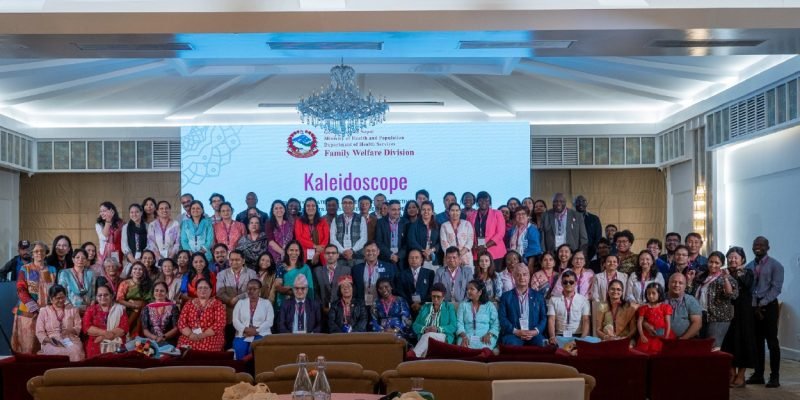
A key milestone for the Kaleidoscope Project was the successful global launch event held on April 4, 2025. This event marked the formal introduction of the initiative to a broad range of stakeholders, including the Department of Health Services, Family Welfare Division (FWD), UN agencies, Civil Society Organizations (CSOs), international organizations, and other key partners. The event successfully established a shared understanding of the project’s overall objectives, strategies, and anticipated outcomes. It also fostered early stakeholder engagement and collaboration, providing a platform for meaningful discussion around the project’s direction and strategic goals. This laid a strong foundation for collective ownership and alignment across sectors.
Staff Orientation Meeting
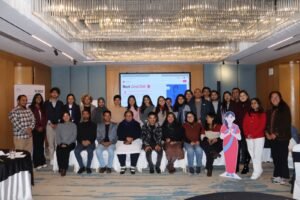
The three-day orientation meeting was held from May 19 to 21, 2025, for project staff and implementing partners. This orientation provided in-depth guidance on the project’s planned activities, goals, and expected deliverables. It served to clarify roles and responsibilities among all participants, which ensured operational alignment and a unified approach to implementation. The sessions also introduced coordination strategies and monitoring, evaluation, and reporting mechanisms to help standardize processes and improve efficiency. Overall, the orientation played a crucial role in building a shared understanding among country-level partners and project staff, promoting stronger collaboration and smoother execution going forward.
Inception Meeting with Family Welfare Division (FWD)
To coordinate and provide updates regarding Kaleidoscope Initiatives, an inception meeting was held at the Family Welfare Division (FWD), Teku, with representatives from both the Visible Impact and BBC teams. Attending from FWD were Dr. Bibek Kumar Lal, Director; Dr. Gauri Pradhan, MNH Section Chief; and Nisha Joshi, Senior Public Health Officer. The main discussion focused on selecting local government levels as project sites and outlining the fundamentals of the baseline survey to be carried out in the project’s first phase.
Kick-off Meeting with Health Directorate, Madhesh Province
A kick-off meeting with the Health Directorate, Madhesh Province, was organized at Janakpur on 5th June 2025. The agenda of this meeting was to provide an orientation and share a yearly plan of Kaleidoscope.
Draft Data Sharing for Baseline Planning and Municipalities Identification with the Provincial Government
As part of the Kaleidoscope Project, a meeting was planned to share baseline planning and municipalities’ identification with the provincial government. The major objectives of the Municipality selection meeting were to review the selection criteria for identifying potential Municipalities for baseline survey and implementation based on geographic coverage, service need, and service gap. The meeting provided a platform for open dialogue, data sharing, and collaborative decision-making in identifying the most appropriate Municipalities for implementing the project.
Kick-off Meeting with Local Government
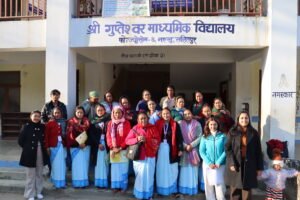
A kick-off meeting with selected 25 local governments from 8 districts of Madhesh Province was organized. The main agenda of this meeting was to provide orientation about the Kaleidoscope, seek approval from the local government, and to brief regarding the baseline survey to be conducted under the Kaleidoscope.
Supporting the Technical Working Committee (TWC) Meetings
Under the Kaleidoscope Initiatives, we also supported the meeting of the Reproductive Health Coordination Committee (RHCC) at the federal level and the Provincial Reproductive Health Coordination Committee (PRHCC-TWG). The main agenda of these meetings was to strengthen the systems and programs to advance SRHR.
Baseline Survey
The baseline year of the Kaleidoscope initiative is dedicated to establishing a strong foundation for impactful project planning and implementation. The data collected through this assessment will provide a comprehensive picture of existing conditions, enabling a more precise setting of intermediate outcomes and targets. It will also inform the refinement of intervention strategies, ensuring that the subsequent implementation phase is grounded in accurate, context-specific evidence and aligned with the initiative’s overall goals.
Safe Abortion Day
In collaboration with the Health Offices of Dhanusha and Mahottari Districts, we observed Safe Abortion Day 2025 by organizing an informative discussion with representatives from local governments and service providers. The discussion focused on the current status of safe abortion services and explored measures to strengthen the system to ensure the quality and accessibility of Safe Abortion services.
Our Impact
As part of the Kaleidoscope Initiatives at Madhesh Province, we have identified 25 local governments from 8 districts where the initiatives will be implemented. The baseline survey has been completed in these local governments, which will further guide the action plan for the Kaleidoscope initiative.