Year: 2021 – 2022
Supported by: Bahadur Social Project
Major Component: Advocacy, TOT, Youth, Menstruation, Family Planning, SRHR
Introduction
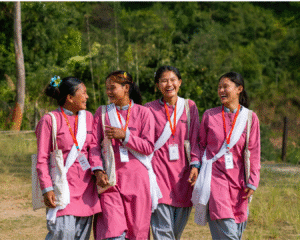
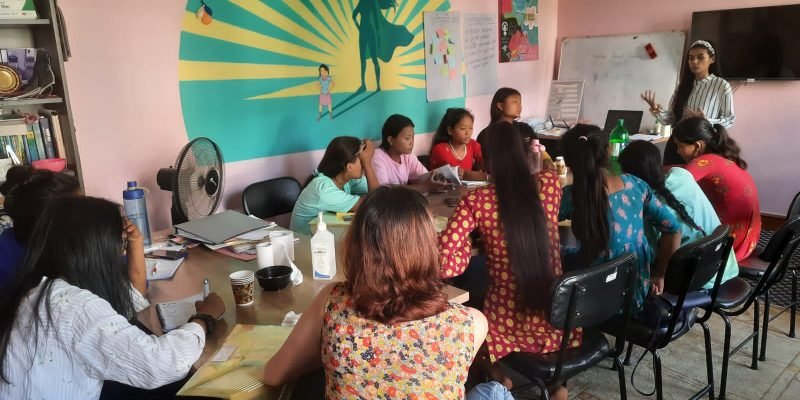
Visible Impact in collaboration with Bahadur Social Project, organized a 3-day intensive Menstrual Health Management (MHM) and Sexual and Reproductive Health and Rights (SRHR) training to Chepang girls of Gorkha in 2021 and 2022 respectively. The training was organized with the objective of building their leadership, knowledge, and skills on MHM and SRHR with an objective to equip them with factual and adequate knowledge, attitude, and practice in these areas.
Major activity
Selection of the training participants
These participants were carefully selected based on their interest in the issue, passion to learn, and some prior experiences garnered in the community. In the second phase, among the eight, four of them were from the batch of 2021 Menstrual Hygiene Management (MHM) training while the rest four were new participants.
Need assessment and tailoring of contents
After completion of the selection phase, the Visible Impact team individually reached out to all the girls through phone calls in order to develop an understanding of their level of knowledge on MHM/SRHR and of their community context and developed the training contents accordingly in consultation with the Bahadur team.
Training of trainers for young girls
The need assessment was then accompanied by a 3-day in–person extensive training on MHM/SRHR for the selected Chepang girls. The sessions on MHM were derived from the MHM Facilitation Guide developed by Visible Impact which has been implemented for more than 5 years in above 50 schools throughout Nepal. These MHM sessions also served as the refresher training for our previous batch of participants.
Our Impact
Participants who had attended the previous year’s MHM training had become way more expressive and confident than how they used to be the previous year.
Additionally, the overall change in the knowledge of SRHR observed through pre and post-tests for all the participants on average was 22%. Post-training completion, the eight Chepang girls were enabled to initiate conversations surrounding a plethora of components of SRHR along with leading community-based workshops in the Gorkha district.