BY KUMAR
More than 2 billion people around the world experience menstruation every month, but millions more still lack access to safe menstrual products, hygiene facilities, and proper information. Known as “period poverty,” this problem is particularly severe in low-income and socially marginalized communities. Those who lack access to safe products like sanitary pads or tampons are forced to use unsafe alternatives like torn clothes, paper, and leaves, which have serious health impacts. This problem is not just a lack of facility, but a deep social injustice—where silence, shame, and policymakers’ indifference further compound the problem.
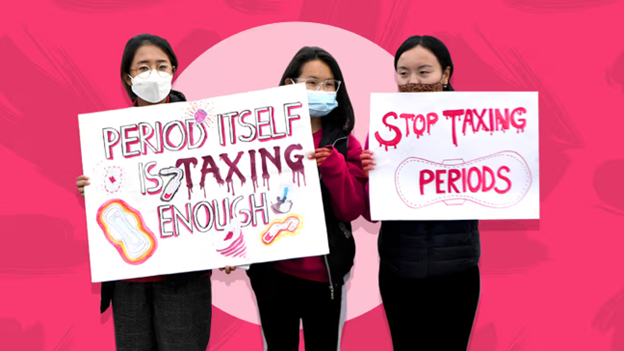
The “pink tax” on menstrual products, a luxury item, has pushed them out of reach for many. Furthermore, the lack of open dialogue and education about menstruation has fueled shame, misinformation, and social exclusion. According to the World Bank, 500 million people lack access to safe menstrual management, while according to UN Women, more than 1.5 billion people lack access to even basic sanitation services, such as private toilets. UNESCO reports estimates that in sub-Saharan Africa, at least 1 in 10 girls miss school because of menstruation. In India, only 36% of rural women use sanitary pads due to cost and cultural barriers.
Period poverty causes girls to drop out of school, deprives women of their income, lowers their self-esteem, and leads to social isolation. The situation is dire even in high-income countries—1 in 4 girls in the United States cannot afford sanitary products, while it is 10% in the United Kingdom. Ignoring this problem not only reduces women’s quality of life, it also keeps them out of the door to opportunity and traps them in the poverty cycle. The stigmatization of menstruation reinforces gender inequality.
Scotland was the first country to make menstrual products free for all under the Period Products (Free Provision) Act 2021. India has started providing subsidized sanitary pads and menstrual education to adolescent girls in rural areas. Organizations like Days for Girls and The Pad Project are active in providing reusable products and menstrual education. Nepal can also adopt strategies such as removing pink taxes on sanitary products, promoting affordable and reusable alternatives, expanding menstrual education in schools, improving WASH (water, sanitation, and hygiene) infrastructure. “Menstrual health is a right, not a luxury.” Only by ensuring information, respect, and access can we end this grave social injustice. The time has come—to end menstrual poverty and help everyone live with dignity.
(Pictures are representative images taken from Google under the Keyword “Period Poverty”)